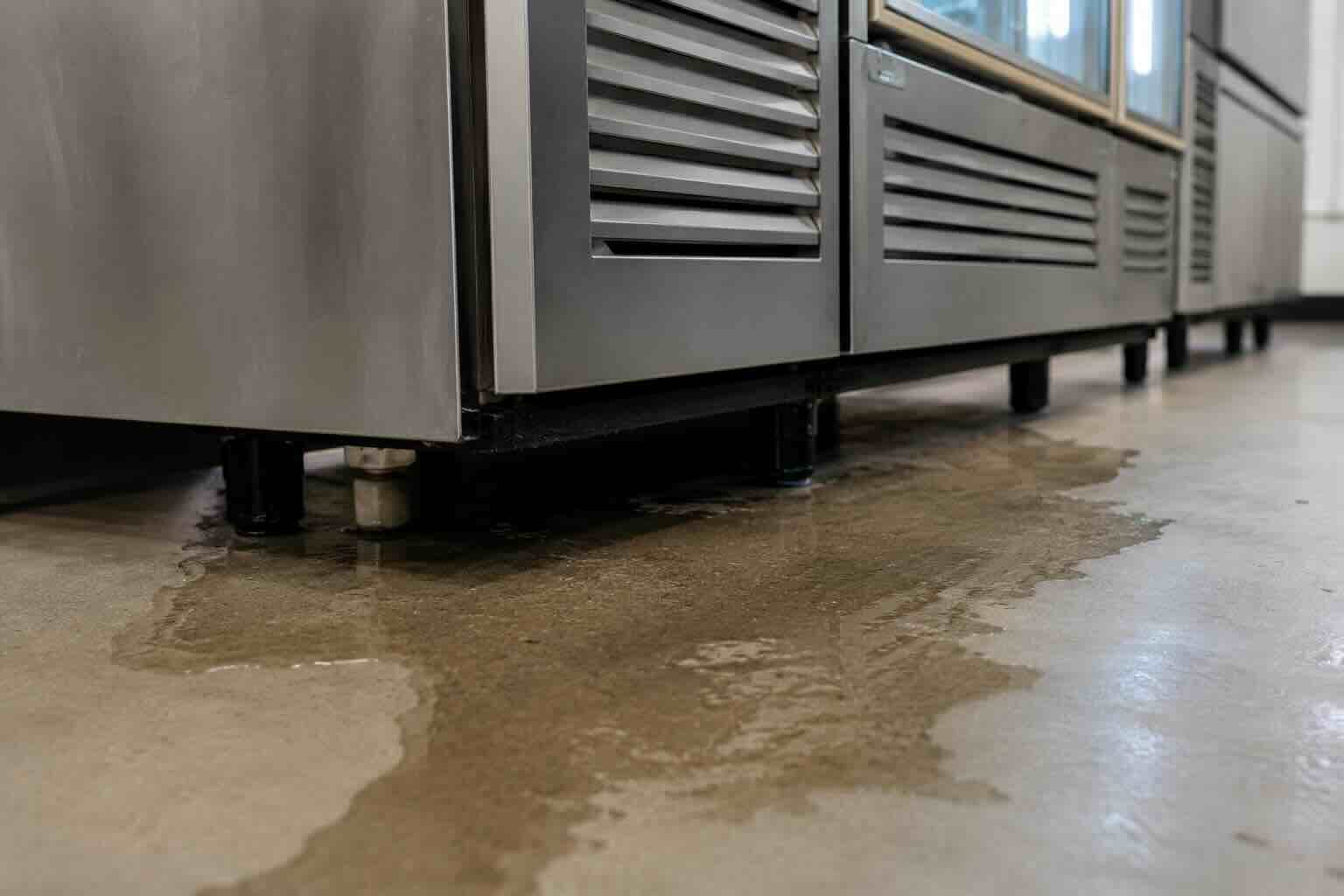
Water around a commercial refrigerator should not be treated as a minor housekeeping problem. Even a small puddle can create a slip hazard, damage flooring, interrupt kitchen operations and indicate that condensation is not draining correctly.
The source may be as simple as an overflowing drain pan, but it can also involve a blocked drain line, evaporator icing, a damaged door gasket or incorrect equipment installation. Because several problems produce similar symptoms, the location and timing of the leak are important diagnostic clues.
This guide explains why a commercial refrigerator may be leaking water, what restaurant staff can safely inspect and when professional commercial refrigerator repair is required.
Why Is My Commercial Refrigerator Leaking Water?
A commercial refrigerator usually produces some condensation during normal operation. Moisture collects around the evaporator and should move through a drain hose into a drain pan or an approved drainage system.
A visible leak means that the water is not reaching the correct destination, the drainage system cannot handle the amount of condensation being produced or one of its components has moved or failed.
Common causes include:
- a blocked condensate drain;
- a frozen drain line;
- an overflowing or damaged drain pan;
- a drain hose that has moved out of position;
- excessive condensation caused by a door-sealing problem;
- evaporator coil icing;
- an unlevel refrigerator;
- an external plumbing or floor-drain problem.
The exact drainage layout varies by refrigerator type and model. Reach-in refrigerators, undercounter units, refrigerated prep tables and display cases may use different combinations of drain hoses, pans, heaters and condensate evaporation systems.
Start by Identifying Where the Water Appears
Before moving the refrigerator or removing any panels, note where the water first becomes visible.
Water inside the cabinet, beneath food pans or at the bottom of the refrigerated compartment often indicates a blocked internal drain or ice around the evaporator area.
Water under the rear or compressor section may point to a drain pan, drain hose or condensate evaporation problem.
Moisture around the door is more likely to be connected to a damaged gasket, a misaligned door, frequent opening or high humidity.
A puddle that appears immediately after cleaning may not be coming from the refrigeration system at all. It may be water trapped beneath the equipment, runoff from pressure washing or leakage from a nearby sink, dishwasher or floor drain.
Recording when and where the water returns can shorten the diagnostic process and help a technician identify the affected system.
1. The Condensate Drain Is Blocked
A blocked condensate drain is one of the most common reasons for water inside or underneath a commercial refrigerator.
Food particles, grease, dirt, biological buildup or ice can obstruct the drain opening or hose. Condensation then backs up into the evaporator drain pan and eventually enters the cabinet or reaches the floor.
Typical signs include:
- water collecting at the bottom of the cabinet;
- a leak that returns after the floor is dried;
- moisture below the evaporator section;
- water appearing during or after a defrost cycle;
- ice around the drain opening.
Staff can visually inspect an accessible drain opening for obvious surface debris. Internal panels, drain heaters and concealed hoses should be left to a qualified refrigeration technician. Improper tools or cleaning chemicals can damage the drain system or push the blockage deeper into the line.
2. The Drain Line Is Frozen
A drain line may be physically clear but still unable to carry water because ice has formed inside it.
This frequently occurs together with excessive evaporator icing. A frozen evaporator restricts airflow and can prevent the refrigerator from maintaining the correct temperature. True Manufacturing lists door-sealing problems, dirty condenser coils, incorrect operation and improper leveling among possible causes of a frozen evaporator coil.
Once accumulated ice begins to melt, the amount of water may exceed what the partially frozen drain can remove. Water then runs into the cabinet or onto the floor.
Do not chip ice from the evaporator or drain area with a knife, screwdriver or other sharp object. This can puncture a coil, damage wiring or create a refrigerant leak. The underlying defrost, airflow or drainage problem must be diagnosed rather than temporarily melted and ignored.
3. The Drain Pan Is Full or Overflowing
Many self-contained commercial refrigerators collect condensate in a pan near the compressor compartment. Heat and airflow normally help the water evaporate.
During humid conditions or periods of heavy use, the refrigerator may produce more condensation than the pan can evaporate. Turbo Air advises that drain pans may overflow during damp seasons and recommends periodic inspection and emptying for applicable models.
An overflowing pan may indicate:
- unusually high ambient humidity;
- frequent door opening;
- a door left partly open;
- an excessive amount of frost melting;
- poor airflow around the compressor compartment;
- a condensate evaporation component that is not operating correctly;
- insufficient preventive maintenance.
Emptying an accessible pan may stop the immediate puddle, but it does not explain why the pan filled faster than normal. If the water returns, the refrigerator should be inspected for excessive condensation or a drainage-system fault.
4. The Drain Pan Is Cracked or Out of Position
A pan does not need to overflow to cause a leak. It may be cracked, corroded, warped or installed incorrectly.
Water may escape as soon as it enters the pan, creating a small but persistent puddle. The leak may appear intermittent because the refrigerator produces condensate in cycles.
The pan can also move when equipment is relocated for cleaning. If it is not placed correctly beneath the drain hose, water will miss the pan and reach the floor.
Manufacturer instructions for applicable Turbo Air models specifically state that the drain hose must be returned to the pan after the pan is removed and reinstalled.
A damaged drain pan should be replaced with a component approved for the refrigerator model. Improvised containers and temporary sealants can interfere with airflow, heat transfer or safe equipment operation.
5. The Drain Hose Has Moved or Become Damaged
The drain hose carries condensation from the evaporator area to the pan or external drainage point. If it becomes disconnected, split, pinched or incorrectly positioned, water may appear beneath the unit even when the drain itself is not blocked.
This can happen after:
- the refrigerator has been moved;
- the drain pan has been removed for cleaning;
- maintenance has been performed;
- the hose has deteriorated;
- equipment vibration has changed its position.
A visible hose can be checked for obvious displacement without dismantling the refrigerator. Do not reach into an energized compressor compartment or remove electrical covers. Disconnecting power at the control does not necessarily isolate every internal component, so service work should be performed by qualified personnel.
6. The Door Gasket Is Not Sealing Correctly
Warm, humid kitchen air enters the refrigerator whenever a door does not close tightly. The additional moisture condenses on cold surfaces and can contribute to frost, dripping water and an overflowing drain pan.
Possible causes include:
- a torn or hardened gasket;
- grease or food residue on the sealing surface;
- a sagging door or worn hinge;
- a defective self-closing mechanism;
- overfilled shelves preventing closure;
- an unlevel refrigerator.
True Manufacturing notes that door and drawer gaskets must seal correctly and identifies defective gaskets, self-closing mechanisms, improper leveling and overstocking as possible causes of poor door closure.
Inspect the gasket for tears, gaps and areas that do not contact the cabinet evenly. Clean accessible gasket surfaces according to the manufacturer’s instructions. A damaged gasket, hinge or door closer should be repaired before the moisture problem turns into a temperature-control problem.
If the gasket is damaged or the door no longer closes correctly, Screws Appliance Repair can inspect the sealing system, drainage components and actual cabinet temperature during the same diagnostic visit.
7. The Refrigerator Is Not Level
Proper leveling affects more than door alignment. It can also determine whether condensation flows into the evaporator drain pan and whether self-closing doors operate correctly.
A refrigerator that tilts in the wrong direction may allow water to remain in the cabinet or run away from the drain opening. It may also prevent a door from closing fully, increasing warm-air infiltration.
True’s commercial refrigeration guidance states that correct leveling supports proper door sealing and allows water to drain from the evaporator pan.
Staff can check whether the refrigerator rocks, whether casters are seated correctly and whether the floor has shifted or settled. Final leveling should follow the equipment manufacturer’s installation requirements. Do not place unstable improvised materials beneath a loaded commercial refrigerator.
8. Excessive Evaporator Icing Is Producing More Water
Water leakage may be a secondary symptom rather than the original failure.
If an evaporator coil becomes heavily iced, a large amount of water can be released when that ice melts. The drainage system may then overflow even if it normally handles routine condensation.
Evaporator icing may be associated with:
- a door that does not seal;
- repeated door opening;
- restricted airflow;
- a dirty condenser;
- a fan problem;
- an incorrect operating condition;
- a control or defrost fault;
- improper loading around air vents.
A technician should determine why the evaporator iced over. Simply removing the ice may restore temporary operation, but the leak and temperature problem will return if the cause remains unresolved.
9. The Water May Be Coming From Another Source
Commercial kitchens contain multiple water and drainage systems in a small area. Water found under a refrigerator does not always originate inside the refrigerator.
Possible external sources include:
- a leaking sink connection;
- a nearby ice machine;
- a dishwasher drain or supply line;
- a backed-up floor drain;
- water used during floor cleaning;
- condensation from adjacent refrigeration equipment;
- overhead plumbing.
Dry the area and observe where fresh water first appears. Check nearby equipment before assuming that the refrigerator is responsible. A refrigeration technician can determine whether the unit is producing the leak or whether a plumber or another service provider is required.
What Restaurant Staff Can Safely Check
Before requesting service, staff can complete a limited visual inspection:
- Mark the wet floor and remove standing water.
- Confirm that the refrigerator door closes fully.
- Inspect accessible gasket surfaces for dirt, tears or gaps.
- Check whether products or food pans are preventing the door from closing.
- Note whether water is inside the cabinet, near the door or beneath the compressor section.
- Look for visible ice around accessible interior surfaces.
- Confirm that the refrigerator is not rocking or visibly tilted.
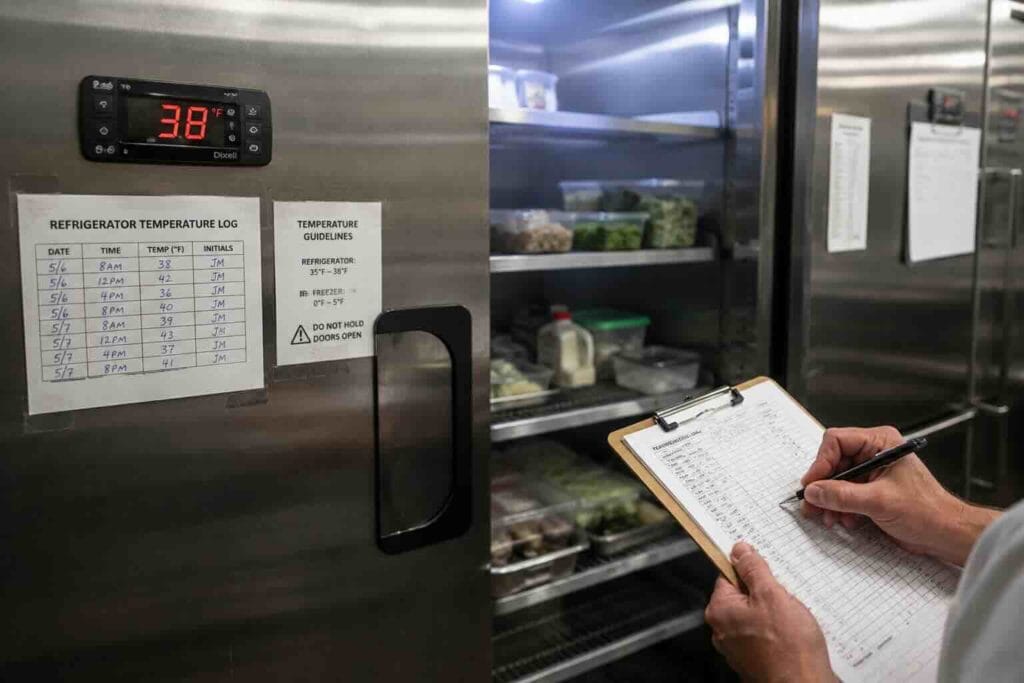
- Record the cabinet temperature and any error code.
- Check nearby sinks, drains and appliances for leakage.
- Move temperature-sensitive products if the refrigerator is not maintaining a safe temperature.
Manufacturer safety guidance warns that improper drainage can create slippery surfaces and that wet areas should be dried and clearly marked. It also states that commercial refrigeration service should be performed by qualified technicians.
What You Should Not Repair Yourself
Do not attempt to:
- remove energized electrical panels;
- dismantle the evaporator assembly;
- bypass a drain or defrost heater;
- use sharp tools to remove ice;
- apply open flame or excessive heat to a frozen drain;
- clean the refrigerator with a pressure washer or hose;
- modify the drain system;
- repair refrigeration tubing;
- handle refrigerant;
- bypass door switches, sensors or safety controls.
These actions can create electrical, fire, equipment and food-safety risks. They can also turn a relatively contained drainage repair into a larger refrigeration-system failure.
When a Water Leak Requires Urgent Service
Arrange professional service promptly when:
- water continues returning after it is removed;
- the refrigerator is not holding temperature;
- products feel warmer than normal;
- the evaporator or interior surfaces are heavily iced;
- water is near electrical components or outlets;
- the drain pan is cracked or inaccessible;
- the door does not close or seal;
- an error code is displayed;
- the compressor runs continuously;
- the leak disrupts a food-preparation or customer area.
Commercial refrigeration problems can affect both operations and food storage. The FDA Food Code uses 41°F or below as the cold-holding standard for time/temperature control for safety food. When cabinet temperature rises, follow your food-safety procedures and do not rely only on how cold the products feel.
How to Reduce the Risk of Future Water Leaks
Preventive maintenance should include drainage as well as temperature and refrigeration performance.
Restaurant managers should:
- inspect door gaskets regularly;
- keep doors closed between product access;
- avoid blocking internal air vents;
- keep the refrigerator correctly loaded;
- monitor and record temperatures;
- check for water during opening and closing procedures;
- clean accessible drain pans according to manufacturer instructions;
- confirm that drain hoses are correctly positioned after cleaning;
- schedule condenser, evaporator and drainage inspections;
- report small puddles before they become recurring leaks.
Commercial refrigerator service pages on the Screws Appliance Repair website list water pooling, leaking, temperature fluctuation, ice buildup and door-sealing problems among the commercial refrigeration issues handled by the company.
Frequently Asked Questions
Can I keep using a commercial refrigerator that is leaking water?
The presence of water alone does not confirm that the refrigerator has stopped cooling. Check and record the actual cabinet temperature. If the temperature is unstable, move affected products to working refrigeration and follow your food-safety plan. The leak should still be inspected because drainage, icing and door-sealing problems can develop into cooling failures.
Why does my commercial refrigerator leak only during humid weather?
Humid air contains more moisture. Frequent door opening allows this air to enter the cold cabinet, increasing condensation. Some manufacturer manuals specifically warn that drain pans may overflow during damp seasons. A leak that occurs repeatedly in humid weather can still indicate insufficient evaporation, poor door sealing or a drainage issue.
Can restaurant staff unclog the refrigerator drain?
Staff can remove visible surface debris from an accessible drain opening if permitted by the manufacturer’s maintenance instructions. Concealed hoses, frozen drains, internal panels and drain heaters should be serviced by a qualified technician. Do not use sharp tools, high-pressure water or unapproved chemicals.
Does water under the refrigerator mean there is a refrigerant leak?
Usually not. Clear water is more commonly associated with condensation, drainage, ice melting or an external plumbing source. Refrigerant-system problems require specialized diagnostic equipment and should not be assessed based only on the appearance of a puddle.
How much does commercial refrigerator leak repair cost?
The cost depends on the equipment type, access to the affected components and the cause of the leak. Clearing a drain, replacing a gasket, repairing a drain heater and correcting an evaporator or control problem involve different parts and labor. An accurate price requires an on-site diagnosis.
Schedule Commercial Refrigerator Repair in NYC
A leaking commercial refrigerator can indicate a drainage problem, excessive condensation, evaporator icing or a door that no longer seals correctly. Drying the floor addresses the immediate hazard but does not correct the equipment fault.
Screws Appliance Repair provides commercial refrigerator diagnostics and repair for restaurants, cafés, bars, stores and other businesses in New York City. The company services reach-in refrigerators, prep tables, display units, undercounter refrigerators, bar coolers and other commercial refrigeration equipment.
If water continues collecting inside or beneath the unit, schedule a professional inspection before the problem affects food temperature or kitchen operations.