
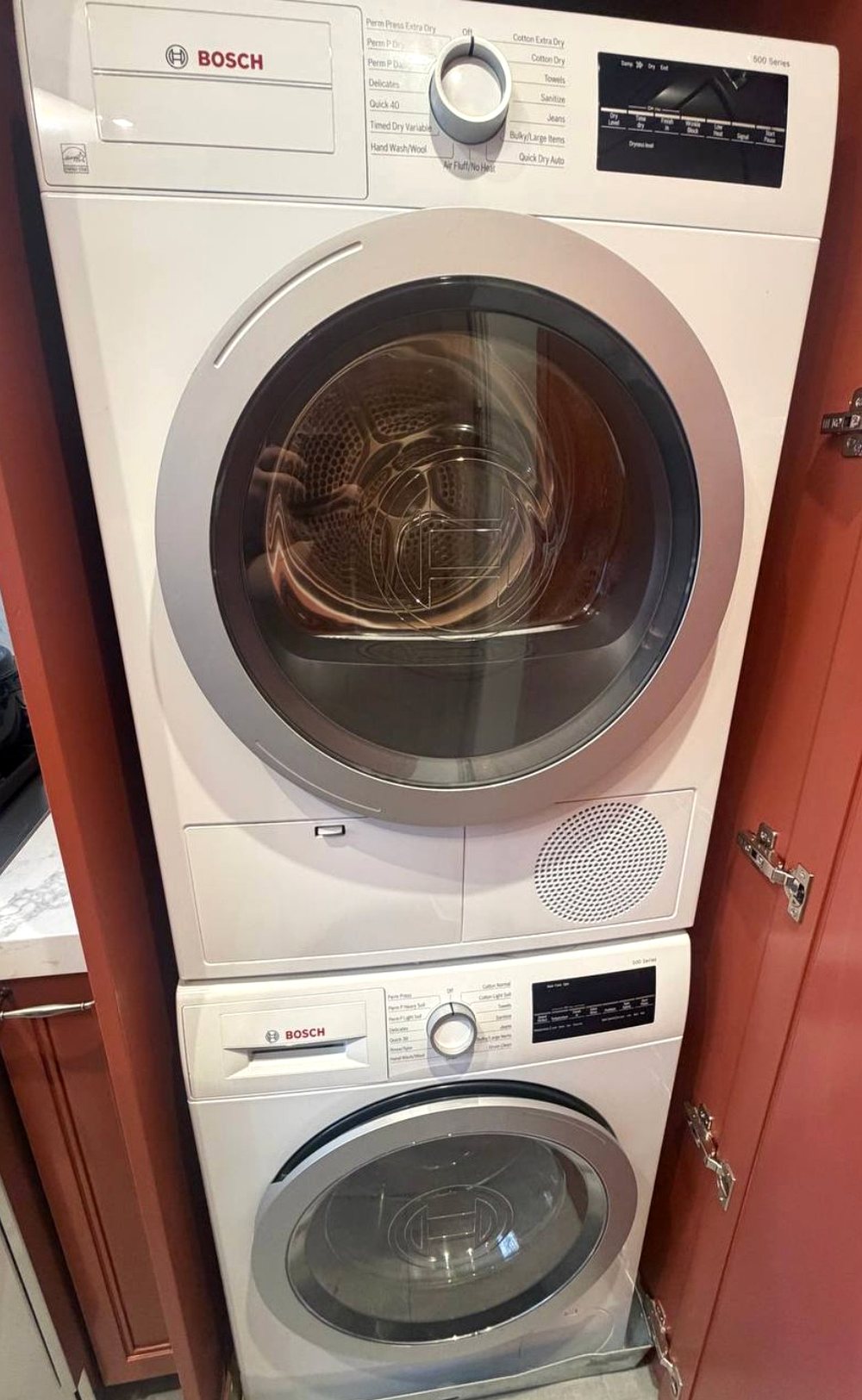
Washer Won’t Drain or Spin? Start With the Simple Checks
A washer that will not drain or spin may have a restricted drain hose, a blocked pump filter, an unbalanced load, excessive suds, an unsuitable cycle setting, or an internal fault. First determine whether water remains in the drum or the water has drained but the clothes are still unusually wet. The symptom alone does not identify a failed part.
This guide is for household washing machines in Boston homes, apartments, and condos, not commercial laundry equipment. It explains safe observations and model-approved checks before scheduling repair.
Manufacturer guidance confirms that a drain problem can prevent spinning, while load balance and cycle selection can affect water removal without a failed pump.
First: Check What “Won’t Drain or Spin” Actually Means
| What you notice | Where to start |
|---|---|
| Visible water remains | Check whether the program is paused or using Rinse Hold; then investigate drainage. |
| Drum appears drained; laundry is wet | Review the spin setting, load balance and suds before suspecting a part. |
| Water drains; drum never spins | Check closure and cycle settings; repeated failure needs further diagnosis. |
On models with Rinse Hold, laundry can intentionally remain in the final rinse water until you select the next step. This is different from Low Spin or No Spin and should be checked in the exact model’s manual. Do not diagnose retained water without checking the selected program.
Before hands-on checks: stop the cycle and let the drum stop. Do not force a locked door. Before cleaning a user-accessible pump filter, allow hot water to cool and disconnect power according to the manual. A front-load washer can release substantial water through the filter opening. If access or water containment is unsafe, leave this task to service.
Common Causes of a Washer Not Draining or Spinning
1. A Kinked or Restricted Drain Hose
Inspect only the visible hose for sharp bends, crushing against a wall, damage, or a change in position. An internally blocked hose can look normal from the outside. Do not pull out a stacked or enclosed washer just to inspect concealed connections.
Drain height, insertion depth, and routing must match the installation instructions. Incorrect installation can. also cause siphoning, where water is drawn out unintentionally; that is not the same as a pump failing to remove water. Do not tape the hose into an airtight standpipe connection or use dimensions from another model.
2. A Blocked Drain Filter or Pump Area
Coins, lint, and small objects can restrict a washer’s drainage path. Some machines have a homeowner-accessible drain-pump filter, but others do not. A filter elsewhere in a washer is not automatically the drain-pump filter. Use the owner’s manual to identify the correct component.
If the manual permits filter cleaning, disconnect power and let the water cool first. Follow its controlled-draining procedure before removing the filter cap. Use suitable containers and protect the floor; do not simply unscrew the cap while the tub contains water. Refit the filter and any emergency-drain cap correctly before restoring power. These precautions are reflected in LG’s filter-care guidance.
Do not remove cabinet panels to reach a concealed filter, probe inside the pump with tools, or treat filter cleaning as permission to replace the pump.
3. The Washer Is Unbalanced or Overloaded
A single heavy item, tangled bedding, an overloaded drum, or a small uneven load can make spinning difficult. The washer may slow down, pause, or repeatedly attempt to redistribute the load. Excessive vibration can. also occur if the machine is not level.
Once the drum has stopped and the door unlocks normally, redistribute or reduce the load as instructed. Do not automatically add more laundry, and do not exceed capacity. If ordinary balanced loads repeatedly cause severe movement, stop testing and arrange service. Leave adjustments that require moving or tilting a stacked unit to the installer or technician.
4. Low Spin or No-Spin Cycle Selection
Delicate and hand-wash programs may deliberately leave more moisture in fabrics. A selected Low Spin or No Spin option can have the same effect; Rinse Hold, where available, may instead leave laundry sitting in water. Check the program and the garment care labels before changing the setting.
If drainage works and the fabric permits it, the model’s Drain & Spin program may remove remaining moisture. Use the actual control instructions, not a generic button combination. A drain/spin program is an operating command; a power reset only restarts the controls and does not clear a physical blockage.
5. Excessive Detergent or Suds
Too much detergent, or the wrong detergent type, can interfere with draining and spinning. Some washers reduce spin speed when suds are excessive. Use HE detergent where required and measure the amount for the product concentration, load, and soil level.
Record any foam or suds warning. Follow the model’s recovery instructions rather than adding detergent, household chemicals, or repeated full wash cycles. Wet clothes alone do not establish that oversudsing is the cause.
6. Drain Pump Problems
The pump can be obstructed or develop a mechanical or electrical fault. Humming, grinding, repeated drain attempts, slow draining, or silence can help describe the problem, but none proves that the pump needs replacement.
A technician must distinguish a restriction from a pump fault or a missing electrical command. Record when the noise occurs and whether any water leaves the tub. Do not open electrical covers, bypass safety devices, or order a pump from the symptom alone.
7. Door, Lid, or Control Problems
A washer may refuse to spin if it cannot confirm the required door or lid condition. Check for fabric caught at the closing area and visible latch damage without forcing anything. A locked door can also be a normal safety response to an unfinished cycle or water remaining inside.
Record the exact error and model before attempting an approved restart. A recurring fault may require checks of the lock, sensors, wiring, controls, or drive system. Do not bypass an interlock or use an emergency door release without the model’s instructions and safe draining conditions.
Washer Drains but Does Not Spin
When drainage finishes normally, repeating drain checks will not necessarily solve a spin problem. Recheck the selected spin speed, fabric cycle, load balance, door closure, and any interruption during the cycle.
Note whether the drum never moves, rotates slowly, or starts and stops. If normal loads still will not spin on a suitable program, professional diagnosis may be needed for the drive, sensing, locking, or control system. Not every washer uses the same belt or motor arrangement.
What Boston Homeowners Can Safely Check
Use this short sequence rather than opening the appliance or restarting the entire wash repeatedly:
1. Record the water and cycle status: Photograph the display and any visible water. Note whether the program completed, paused, or stopped with an error.
2. Review the settings: Check spin speed, Rinse Hold if fitted, and the selected fabric program in the manual.
3. Inspect accessible areas: Look at the visible hose and load. Do not disconnect plumbing or move a stacked set.
4. Clean only an approved filter: Use the cooling, power-isolation and controlled-draining precautions in section 2. Reassemble everything correctly.
5. Try only the permitted drain/spin command: Only when there is no leak, electrical hazard or severe movement, use the model’s normal command once. Stop if water still will not drain or the problem returns.
What Not to Do
Do not repeatedly run full wash cycles with abnormal standing water. Do not force a locked door, bypass a lid switch, modify wiring, or dismantle concealed pumps. Do not pull out a stacked washer without accounting for the connections of both appliances.
If water is near electrical connections, the cord is damaged, there is a burning smell or sparking, or the. breaker trips repeatedly, stop using the machine. Keep clear of wet plugs and outlets; disconnect power only from a safe, dry location and arrange assistance. Do not keep resetting a tripped breaker.
When Should You Call a Washer Repair Technician?
Arrange service if water remains after the correct drain command, drainage repeatedly fails after permitted maintenance, normal loads will not spin, or an error returns. Abnormal grinding, serious vibration, leaks, and inaccessible internal components also justify professional diagnosis.
Check where any escaping water originates. An overflowing standpipe or backed-up laundry sink may point to the building drain rather than a failed washer pump. Stop running the washer and contact building maintenance or a plumber for a drain backup. The appliance may also need inspection; do not assume one repair covers both systems.
How to Prepare for Washer Repair in Boston
Provide the brand, model and serial number, photos of the display and data label, whether water remains, and what happens during drain and spin. Mention recent installation, relocation, plumbing work, detergent changes, a power interruption, or a bulky load.
For an apartment or condo, mention stairs or elevator access, laundry-closet clearance, whether a dryer is stacked above the washer, and any building entry or scheduling rules. Coordinate with the owner or manager when approval is needed. Do not remove cabinetry or disconnect the unit before the visit unless specifically instructed.
For example, tell the technician: “The wash stopped before spin. Water is still visible, the drain command produces a hum, and this code appears.” This is more useful than simply saying the washer is broken.
Preventive Washer Maintenance
Follow the exact model’s care schedule. Empty pockets, use the recommended detergent and amount, avoid overloading, and choose a cycle appropriate for bulky items. Keep any user-serviceable pump filter clean and inspect the visible drain hose for damage or crushing.
Investigate a new noise, slower drainage, or repeated balance warnings rather than compensating with more detergent or constant restarts. Run cleaning cycles only when the washer can operate and drain safely.
Maintenance intervals and accessible components differ by model.
Frequently Asked Questions
Why is my washer not draining or spinning?
A restricted drain path, filter or pump problem, excessive suds, an uneven load, cycle settings, or a lock/control fault may be involved. First distinguish visible water from a drained drum with wet laundry; also check for intentional Rinse Hold.
Why is there water left in my washing machine?
The cycle may have paused, Rinse Hold may be selected, or drainage may be restricted. A kinked hose, blocked filter or pump, or a building-drain problem needs a different response from an intentionally held rinse.
Can an unbalanced load stop a washer from spinning?
Yes. Some washers slow or stop spinning to manage an uneven load. Redistribute laundry only after the drum stops and the door unlocks. Repeated severe vibration with normal loads needs further assessment.
Can too much detergent stop a washer from spinning?
Excessive suds can disrupt drainage or reduce spin speed. Use the specified detergent type and measured dose, then follow the model’s suds-recovery instructions. Do not add more detergent or improvised chemicals.
Why does my washer drain but not spin?
Check cycle selection, spin speed, balance, closure, and any error first. A persistent failure can involve the drive, lock, sensing, or controls. Successful draining does not prove that every part of the washer is working.
Should I clean the drain pump filter myself?
Only if the manual identifies it as user-serviceable. Disconnect power safely, let water cool, use the prescribed draining procedure, and refit all caps correctly. Do not open concealed panels to look for a filter.
Should I keep running the washer if it will not drain?
Do not repeat full wash cycles. An approved drain command may be appropriate when there is no leak or electrical hazard, but continued failure needs service. A restart does not remove a physical blockage.
Does every washer drain and spin the same way?
No. Filters, hoses, drive systems, sensors, and controls vary. Use the exact model’s instructions; a filter procedure, hose dimension, reset, or error-code meaning from another machine may not apply.
Washer & Dryer Repair in Boston
Screws Appliance Repair provides residential washer and dryer diagnostics and repair in Boston and nearby areas. If drainage or spinning does not return after safe checks, request washer and dryer repair in Boston and provide the model, error code, photos, and a description of the drain and spin stages. Confirm access requirements and appointment availability when booking.