
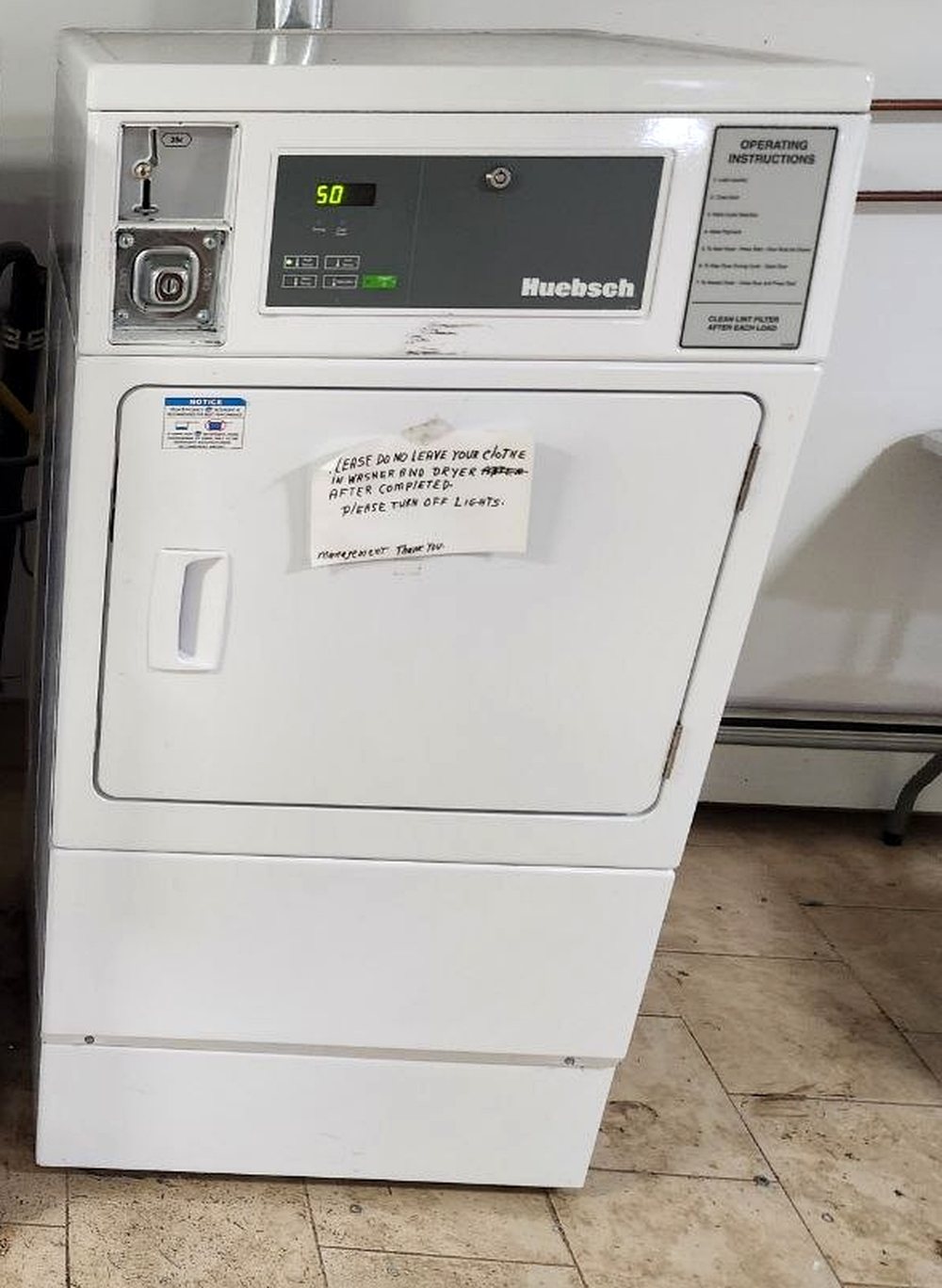
A dryer that runs but produces little or no heat may have an unsuitable cycle selected, restricted airflow, a supply problem, or a fault in its heating or control system. Damp clothes alone do not prove that the heating element has failed.
This guide covers household dryers in Boston homes, apartments and condos. Start by identifying the model, how it produces heat and whether it vents outdoors. The seven checks below help separate normal operation from a problem that needs professional diagnosis.
Safety first: If you smell gas indoors, leave the building and call 911 from outside. Do not turn the dryer or switches on or off, unplug appliances or try to shut off the gas. Smoke or suspected fire also requires evacuation and an emergency call, not a repair appointment. Do not run another test when there is a burning odor, abnormal overheating, damaged wiring or a tripping breaker.
Why Is My Dryer Not Heating?
Possible causes include a no-heat setting, blocked lint or exhaust passages, an inadequate electrical supply, a gas-supply or ignition problem, a heating or safety-control fault, or a ventless dryer’s maintenance or condensate issue. These are possibilities, not a parts diagnosis.
Record whether there is no heat throughout the drying stage, warmth followed by an unexpected stop, or normal warmth but unusually slow drying. Cool air after the drying stage can be normal on models with an unheated anti-wrinkle function.
1. Check the Cycle and Temperature Settings
Air Only or Air Fluff uses unheated air. Delicates generally uses reduced heat rather than no heat; the exact program matters. Energy-saving options can lower the heat or lengthen a cycle, and some dryers continue tumbling without heat after drying is finished.
Compare the selected program, temperature and dryness level with the manual and garment labels. Sensor cycles can behave differently with very small loads or items that do not contact the moisture sensors consistently.
If there are no safety warnings or signs of restricted airflow, use only the manufacturer’s approved heat-check procedure. A timed test and its load requirements are model-specific; do not apply one brand’s empty-drum test to every dryer. Observe through the normal controls without reaching into a moving drum.
2. Clean the Lint Filter and Check Airflow
On a vented dryer, restricted airflow can leave clothes damp even when heat is being generated. It may also contribute to overheating. Cleaning the lint screen is a useful first step, but a clean screen does not prove that the duct to the outside is clear.
Stop the machine and let hot surfaces cool before routine lint-screen care. Clean the screen after each load and reinstall it correctly. Wash away residue only as the manual directs; follow its drying requirements before refitting. Before any deeper user-authorized maintenance, follow the manufacturer’s electrical-disconnection procedure. Do not handle a damaged plug or wet electrical equipment.
Without moving the appliance, look for an obviously crushed visible duct or blocked outdoor outlet that is safely accessible from the ground. Do not climb, dismantle shared ducts or run the dryer with the exhaust disconnected as a test. Persistent weak airflow or unusually long cycles calls for inspection of the entire vent path, not just the lint filter.
Ventless dryers do not have the same outdoor exhaust path. Their filters, condensate collection and heat-exchange maintenance must be checked against the exact manual; not every heat exchanger is removable or intended for homeowner cleaning.
3. Identify the Dryer Type: Electric, Gas and Ventless Designs
Electric or gas describes the energy source; vented or ventless describes how moisture is handled. A ventless dryer is normally electric, so these are overlapping features, not three interchangeable power systems.
Conventional electric dryers
Many full-size resistance-heated electric dryers require a 240-volt supply. A supply fault can leave the drum or display operating while heating is unavailable. That does not prove that the element needs replacement. Compact and heat-pump models can have different requirements; for example, Miele lists the TXI680WP as a 120-volt heat-pump dryer. Use the data plate and installation manual, not a blanket voltage rule.
Do not test live terminals, remove electrical covers, tighten wiring or repeatedly reset a tripping breaker. Have a qualified electrician investigate a suspected circuit, receptacle or supply fault.
Gas dryers
A gas dryer needs electricity to tumble and gas to generate heat. Loss of gas supply or an ignition, burner, safety-control or valve problem can therefore leave it running without heat. Mention any recent installation or utility work, but do not reconnect gas lines, operate an unfamiliar valve or open the burner compartment. Suspected leakage requires the emergency response above.
Ventless electric dryers
Ventless designs collect moisture as condensate; they may use resistance heating or a heat pump. Heat-pump dryers reuse heat and can operate at lower temperatures, so feeling less heat than an older vented dryer is not enough to diagnose failure. Assess actual drying results and changes from the machine’s usual performance.
Check approved maintenance filters and any container-full warning. Some installations drain condensate through a hose instead of requiring routine container emptying. Follow the specific cleaning procedure: Miele, for example, warns against reinstalling a dripping-wet toe-kick filter. Do not scrape delicate fins or open the refrigeration circuit.
4. Consider an Airflow or Overheating Safety Problem
Unusually hot surfaces, a burning odor, repeated premature stops or a new pattern of heating interruptions deserve attention. Restricted airflow and a temperature-control problem are possible explanations, but the symptoms do not identify a particular failed component.
Do not confuse ordinary heat cycling or an unheated end-of-cycle function with repeated loss of drying performance. The concern is a change from normal behavior, persistent wet loads or a warning condition. An airflow-related error can call for vent maintenance, while recurring faults may require further testing.
Do not keep restarting an overheating dryer to finish the load. Discontinue use and arrange assessment. For smoke, fire or gas odor, follow emergency procedures rather than investigating the appliance yourself.
5. A Failed Heating Element or Thermal Component May Be Responsible
In a resistance-heated dryer, a failed element, thermostat, thermal cutoff, sensor, connection or control can interrupt heating. A heat-pump model uses a different heating system; a generic recommendation to replace a resistance element may not apply.
Safety devices are not interchangeable. Depending on the circuit, an opened safety device can stop heating or prevent the dryer from running. Whirlpool describes a thermal fuse that interrupts the motor circuit and cannot be reset once opened. Do not assume that every thermal fuse causes a tumbling-but-cold symptom.
A technician should establish which circuit failed and why. If overheating opened a safety component, the underlying airflow or control problem also needs attention. Never bypass a protective device or patch a damaged heating coil. Use model-specific diagnosis before ordering parts.
6. Check for Error Codes and Repeated Cycle Interruptions
Photograph the code before clearing it. Record the program, when the warning appears, whether the drum keeps turning and whether heating stops or the entire appliance shuts down.
A heating or airflow code describes a detected condition, not necessarily the part to replace. Use the manufacturer’s documentation for the exact model; a code from another brand is not a reliable translation.
A permitted control restart is not the same as repairing a blocked vent or an opened safety fuse. If a warning returns after the approved checks, request diagnosis rather than repeatedly clearing it.
7. When a Dryer Takes Too Long to Dry but Still Produces Heat
If the load becomes warm but remains damp, review the load size, fabric mix, cycle and prescribed filter maintenance. Look for a change from normal performance rather than comparing all dryer designs with the same expected cycle time.
Also note whether laundry comes out of the washer unusually wet. Inadequate water removal before drying adds moisture the dryer must remove; record that as a separate washer or spin issue instead of assuming the dryer has no heat. Use only fabric-appropriate washer settings.
On vented models, ongoing slow drying warrants full exhaust-path inspection. On ventless models, maintenance filters, condensate handling, room conditions specified by the manufacturer and internal operation may need checking. Lower-temperature heat-pump operation or an energy-saving option does not excuse a sustained decline in results.
Quick Troubleshooting Table
| Symptom | What it may mean | Next step |
|---|---|---|
| Drum turns but no heat during drying | No-heat selection, supply or internal heating fault | Check the program; record the model and behavior. |
| Clothes need several cycles | Airflow restriction, unsuitable load/program or excessive starting moisture | Check approved filters, loading and how wet clothes leave the washer. |
| Warm at first, then cool | Normal cycle stage or an interruption requiring diagnosis | Check the displayed stage; do not keep testing if overheating or poor results recur. |
| Gas dryer runs without heating | Supply, ignition, burner or control issue | Request qualified diagnosis; gas odor requires evacuation and 911. |
| Ventless dryer dries poorly | Filter, condensate or heating-system issue | Follow the model-specific filter and condensate checks. |
| Same error returns | Model-specific operating or fault condition | Photograph the code; consult the correct manual and arrange service. |
| Burning odor, smoke or breaker trips | Potential overheating, fire or electrical hazard | Stop use; smoke/fire requires leaving and calling 911. Do not repeatedly reset breakers. |
This table is a guide to observations, not a substitute for the model’s instructions or professional testing.
What Should Boston Homeowners Do Before Calling for Repair?
Have the brand, model, serial number if accessible, selected cycle, error code and a brief symptom history ready. Explain whether the drum turns, heat is absent throughout the drying stage, or clothes warm up but remain damp. Mention recent installation, electrical work, vent cleaning, relocation or changes in the washer’s spin performance.
Photograph the controls and model label without opening service panels. Note whether the dryer is stacked, built into cabinetry or installed in a closet. Do not unstack or pull it out merely to improve access.
For a Boston apartment or condo, coordinate with the landlord or building manager before work on shared exhaust routes or utility connections. Explain access arrangements and whether vent service or an electrician is already involved. Repairing the appliance and clearing a building exhaust obstruction may be separate jobs.
How to Help Prevent Dryer Heating Problems
Clean the lint screen after every load, keep nearby storage away from the dryer and leave installation ventilation openings unobstructed. Arrange vent inspection and cleaning according to the installation, usage, manufacturer instructions and fire-safety guidance; do not wait for a calendar interval if performance has already deteriorated.
For ventless machines, follow the specified filter and condensate-care schedule rather than an outdoor-duct routine. Use suitable load sizes, cycles and garment-care instructions. Report changes in drying time, repeated codes and abnormal odors rather than working around them with longer cycles.
Massachusetts fire-safety guidance recommends having an adult at home while the dryer operates and keeping working smoke alarms. A dryer that still turns is not necessarily safe to keep using.
Frequently Asked Questions
Why does my dryer run but not heat?
An unheated program, a supply issue or a heating/control fault may be responsible. First check whether you are observing the actual drying stage, not an unheated anti-wrinkle function. The next steps depend on the heating system and exact model.
Can a clogged dryer vent cause a dryer not to heat?
Restricted exhaust can reduce drying performance and may lead to overheating-related heating interruption. It does not prove that a heater or safety device has failed. A clean lint screen does not rule out a blockage elsewhere in a vented dryer’s exhaust path.
Is it safe to keep running a dryer that is not heating?
Do not assume that cold air makes a dryer safe. Limit checks to the approved procedure, without repeated full cycles. Stop for burning smells, abnormal heat or electrical trouble. For gas odor or smoke/fire, leave and call 911 from outside rather than testing or waiting for repair.
Why does my electric dryer tumble but produce cold air?
A conventional electric dryer can have enough power for the motor but not the required supply for heating. A setting, heating element or control fault is also possible. Voltage requirements differ by design; supply testing belongs to a qualified professional, not a live-terminal homeowner test.
Why is my gas dryer not heating?
An interrupted gas supply, igniter, valve, burner-control or safety fault can prevent heating while the drum turns. Do not open the burner system or reconnect gas lines. A suspected leak requires evacuation and an emergency call, not a normal repair booking.
Can a dryer heating element be repaired?
A technician must first confirm that the model uses a resistance element and that the element is actually faulty. Replacement may be appropriate under the manufacturer’s service procedure. Do not patch the coil or bypass safety devices, and have the cause of any overheating investigated. Heat-pump dryers require a different diagnostic approach.
When should I call a dryer repair technician in Boston?
Arrange service if correct settings and approved external maintenance do not restore normal drying, a warning keeps returning or heating repeatedly stops unexpectedly. A supply fault may need an electrician; a shared-duct obstruction may need building maintenance or a vent specialist. Emergency warning signs require immediate safety action.
Dryer Repair in Boston, MA
Screws Appliance Repair provides washer and dryer diagnostics and repair in Boston and nearby service areas. The service includes electric, gas, ventless and stacked laundry appliances, with diagnosis before recommending repairs.
If your dryer is not heating after the safe checks, request dryer repair in Boston. Provide the model, symptoms, any code and access details so the team can prepare for the visit. Do not disconnect the appliance or alter utility connections before service unless specifically instructed by the appropriate professional.